


TUUGLOW / Bracelet Guide
Measure once. Choose with confidence.
A practical bracelet size guide for chain bracelets, rigid bangles and open cuffs - with a printable check, fit notes and one real TUUGLOW example.

Quick answer
Start with the wrist, then read the design.
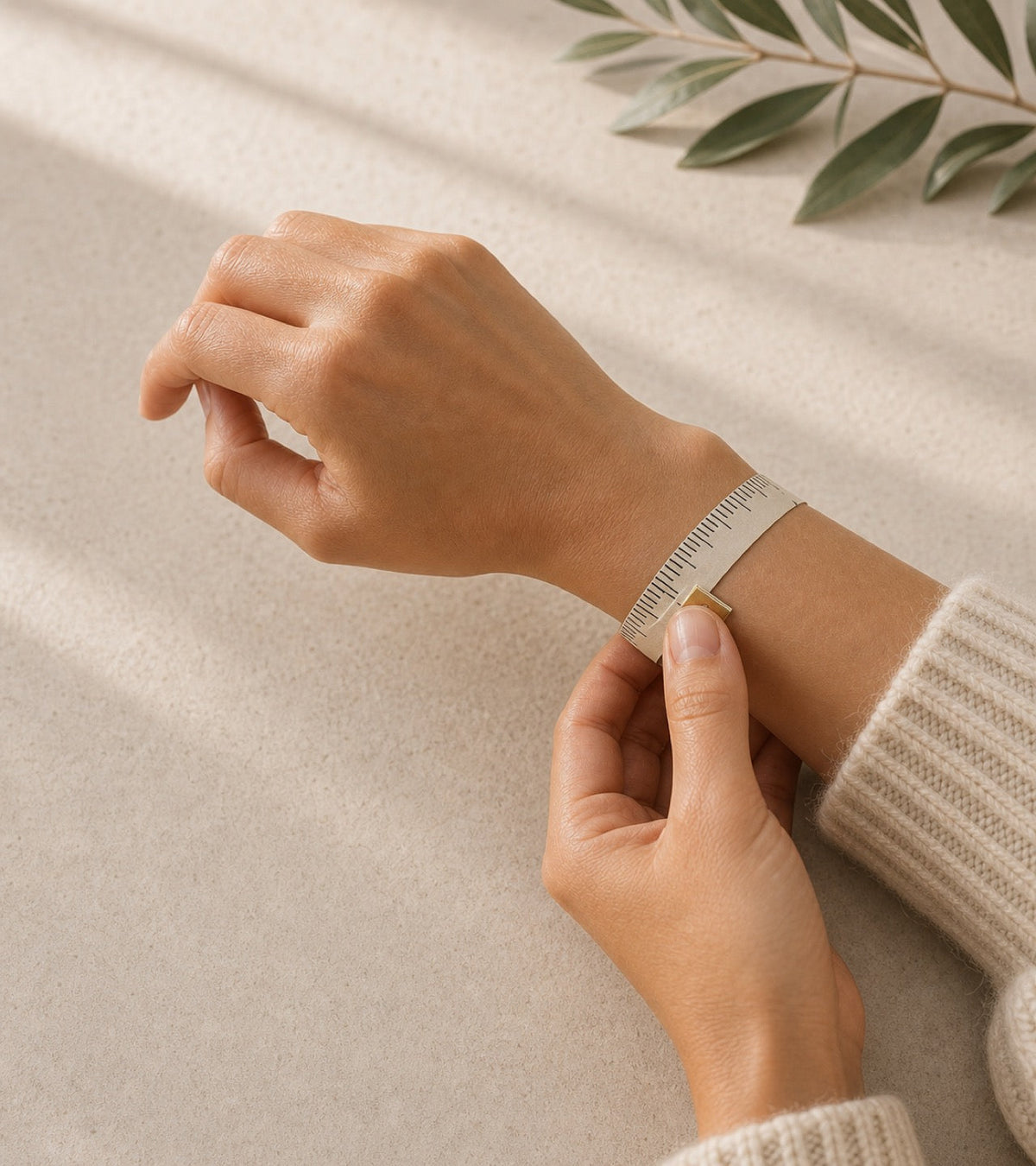
Wrap a flexible tape around the part of your wrist where the bracelet will sit. Keep it flat against the skin without pulling tight and record the number in centimeters or inches. If you use string, mark the overlap and measure it against a ruler. That wrist measurement is the starting point - not the final bracelet size. Chain bracelets, closed bangles and open cuffs each create space differently, so always compare your number with the exact dimensions and fit notes on the product page.
01 / The measurement
How to measure your wrist for a bracelet.
You need a flexible measuring tape, a strip of paper, or a non-stretch string plus a ruler. Measure the wrist you plan to wear the bracelet on; the dominant and non-dominant wrist can differ slightly.
- Choose the wearing point. Measure where the bracelet will naturally rest, usually just below the wrist bone. For a wider cuff, also check the slightly broader area the band may cover.
- Keep the tape level. Wrap the tape flat around the wrist. It should touch the skin without compressing it. Do not angle it toward the hand or forearm.
- Record the exact number. Write down the measurement before adding any ease. Keep centimeters and inches separate so they are not accidentally mixed.
- Compare with the product. Look for inner diameter, circumference, opening, clasp adjustment and band width. Those details explain how the piece will actually pass over the hand or sit at the wrist.
Printable check
Measure the wrist, not an existing bracelet.
Place the tape where the bracelet will sit. The horizontal line represents the measuring tape; the vertical line marks the overlap point. If you are between two listed sizes, the larger option is usually the safer starting point, but the product construction still decides the final fit.
Print at 100% with scaling disabled. Before using any printed measurement aid, compare the line below with a physical ruler. It must measure exactly 5 cm.
5 cm calibration line
02 / The construction
One wrist number. Three different fit questions.
A bracelet size guide works only when it respects the style. A flexible chain wraps the wrist; a bangle must pass over the hand; an open cuff uses an opening and inner diameter.
Chain bracelets
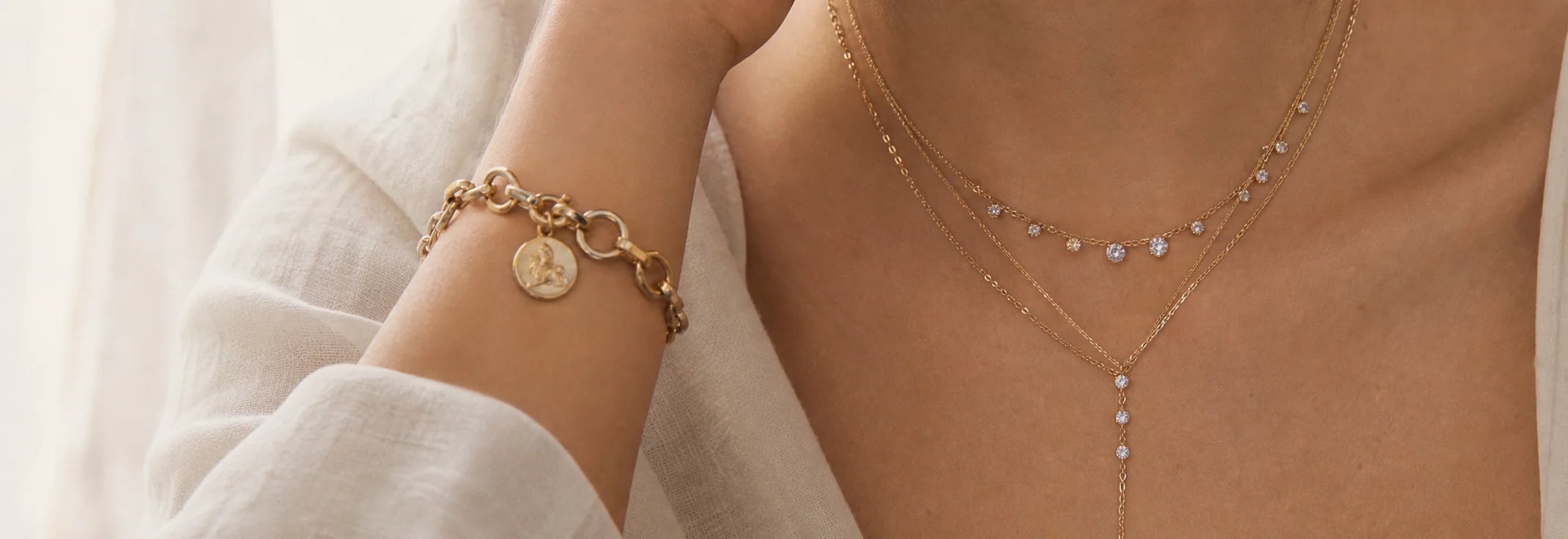
Begin with wrist circumference, then check the adjustable length or clasp positions. A close fit uses little extra room; a relaxed fit needs more movement. Charm-heavy designs may also need enough space to keep the charms from pressing into the wrist.
Closed bangles
The wrist alone is not enough because a rigid bangle must move over the widest part of the hand. Bring the thumb toward the little finger, measure around the widest knuckle area, and compare that number with the bangle's inner circumference or diameter.
Open cuffs
Read the inner diameter, opening and band width together. The opening helps the cuff pass onto the wrist; the inner diameter controls how it sits; the band width changes how substantial it feels. Never assume every open cuff can be reshaped repeatedly.
| Fit preference | What it should feel like | What to check |
|---|---|---|
| Close | Minimal movement, but no pinching, pressure marks or restricted circulation. | Use the wrist measurement as the base and confirm the maker's minimum recommended size. |
| Comfortable | Enough room for normal wrist movement without the piece turning excessively. | For some designs, approximately 1 cm beyond the wrist can be a useful starting point. Confirm against the product's own guide. |
| Relaxed | Visible drape and movement, without sliding over the hand. | Choose the longer available setting or larger size only when the clasp, charms and construction support it. |

03 / Worked example
How to read an open cuff: Aalto Heart.
The Aalto Heart Cuff Bracelet is an open cuff, so its product dimensions answer a different question from a chain bracelet length. Its 5.82 cm inner diameter describes the space across the inside. The 2.93 cm opening describes the gap used to place the cuff onto the wrist. The 0.82 cm band width explains its visual and physical presence.
Aalto is described as gently adjustable, but that does not mean it should be repeatedly bent or forced to fit every wrist. Compare your wrist measurement with these dimensions, consider where the wider band will rest, and use the product page as the final source for construction and care.
04 / On the wrist
Fit is a relationship between scale and movement.
A narrow chain can feel light even with a little drape. A broad cuff occupies more of the wrist, so the same amount of ease may feel more secure. Look at model images for scale, but do not use a photograph as a measurement tool. Camera angle, wrist position and cropping can change how large a bracelet appears.
The reliable sequence is simple: measure your wrist, identify the construction, read the exact dimensions, then choose the fit preference. If a product page does not list enough information, ask before ordering rather than guessing from a lifestyle image.

05 / Before you choose
Six bracelet sizing mistakes that create the wrong fit.
AEO / Quick questions
Bracelet size questions, answered.
These answers are designed to help you narrow the fit. The exact product measurements remain the final reference.
How do I measure my wrist for a bracelet?
Wrap a flexible measuring tape around the point where the bracelet will sit. Keep it flat and comfortably close to the skin, record the exact circumference, then compare it with the size and construction notes for the bracelet you want.
How much larger should a bracelet be than my wrist?
There is no single allowance for every bracelet. Flexible chains, rigid bangles and open cuffs use space differently. For some comfortable fits, about 1 cm beyond the wrist can be a starting point, but the brand's size chart and the product's construction should decide the final choice.
What if I am between two bracelet sizes?
The larger size is usually the safer starting point, especially for a rigid style, but check whether the design is intended to fit close or relaxed. An adjustable chain may offer a better solution than sizing up a fixed bracelet.
Can I measure a bracelet I already own?
Yes, as a comparison. Lay a chain bracelet straight and measure end to end, or measure the inner diameter of a rigid bangle or cuff. Also measure your wrist so you understand how the existing piece's dimensions relate to your body.
How should an open cuff bracelet fit?
An open cuff should sit securely without pinching or creating pressure marks. It should not rotate uncontrollably or slide over the hand. Check inner diameter, opening and band width rather than relying on a general small, medium or large label.
Can an open cuff be bent to fit?
Only when the product specifically says it is adjustable, and even then adjustment should be gentle. Repeated bending can weaken the structure or affect the finish. Never assume an open cuff can be reshaped to fit every wrist.
How do I choose a bracelet as a gift without knowing the size?
Choose a bracelet with a clearly adjustable chain or extension range, or consider a no-size gift such as earrings or a brooch. Our no-size jewelry gift guide explains the lowest-risk options.
The next step
Choose the shape after you know the fit.
Explore TUUGLOW bracelets with your wrist measurement ready, then check each product's exact dimensions, material and care notes. TUUGLOW pieces bring a Nordic-inspired point of view to quiet everyday glow.


