


Fall outfits 2026 for women
Seven ways to make familiar clothes feel new
The most wearable fall outfits in 2026 are built around contrast: protective outerwear over a calm base, tailoring eased by something softer, and one deliberate point of color or light. These seven formulas translate the season without requiring a new wardrobe.

The clothes are familiar.
The relationships are new.
The best fall outfits for women in 2026 still begin with familiar pieces: a good coat, a blazer, a shirt, knitwear, denim, a fluid skirt, loafers and boots. What has changed is the relationship between them.
Outerwear is doing more of the visual work. Shirts and tailoring are being worn with less corporate stiffness. Fine or body-following layers are appearing beneath stronger jackets, while saturated color cuts through the usual camel, chocolate, gray and navy. The result is not a single new uniform. It is a season of controlled tension: hard with soft, long with close, practical with polished, familiar with slightly unexpected.
That is good news for a real wardrobe. You do not need to reproduce a runway look or replace every basic. Choose one current signal, make the rest of the outfit support it, and leave enough quiet for the idea to register.
The real Fall 2026 trend is tension.
The season looks contradictory at first. Vogue’s Fall 2026 report identified button-down shirts, tuxedo codes, closer attention to the body and strong color-blocking in the same collections. Copenhagen coverage emphasized cold-weather dressing—substantial coats, scarves, knitwear and dressed-up basics. In Milan street style, structured coats, leather bombers and precise tailoring were softened by silk, lace and more relaxed pieces.
Taken together, those signals suggest something more useful than a list of micro-trends. Fall 2026 is interested in clothes that negotiate with one another. A firm shoulder makes a fluid skirt look intentional rather than delicate. A white shirt gives a soft cardigan definition. A dark column makes electric blue feel precise instead of loud. A weather-ready jacket becomes more polished when the trouser line and shoe are considered.
This is TUUGLOW’s editorial interpretation of the season, not a rule everyone must follow. Its value is practical: contrast can make clothes you already own feel newly composed.

Three shifts worth bringing home.
Choose one shift as the outfit’s argument. The rest of the wardrobe can remain quiet.
The outer layer becomes the outfit
Fall outerwear has always been necessary. In 2026, it is also the first design decision. Runway and street-style coverage repeatedly placed attention on coats, leather jackets, bombers, trenches and weather-conscious layers, while current capsule guides treat outerwear as the category that keeps the most combinations working as temperatures change.
The everyday translation does not require an extreme shoulder or a theatrical coat. It means choosing the outer layer first, then simplifying what sits beneath it. Let the coat establish length, the blazer establish the shoulder or the bomber establish volume. If the outer layer has a clear shape, the base can be quiet.
Tailoring is clearer, but less obedient
The shirt and suit have returned without returning to a complete office uniform. A crisp collar may sit beneath a relaxed cardigan. A close fine-gauge knit may replace the expected blouse under a blazer. Tailored trousers can meet a leather bomber or practical chore jacket instead of a matching suit coat.
The point is not to look more formal. It is to let one precise line—a collar, crease, shoulder or cuff—organize the softness around it. This is why the season’s tailoring can feel authoritative and relaxed at the same time.
Color behaves like an interruption
The usual autumn palette remains useful, but it is no longer the whole story. Vogue’s Fall 2026 color report highlights electric blue, red, purple, turquoise and softer peach tones alongside enduring burgundy. Cobalt is especially useful because it works either as a complete monochromatic statement or as one sharp element against navy, gray, cream or brown.
You do not need all of those colors. Begin with a foundation—cream, camel, chocolate, charcoal, dark denim or navy—then add one interruption. It may be a cobalt jacket, a red knit, a burgundy shoe or a smaller polished detail. One decisive accent usually feels more modern than several competing ones.
Seven wearable Fall 2026 outfit formulas.
Repeat the relationship—not the exact look. Change the color, weather layer or finishing detail according to the clothes already in your wardrobe.

Electric blazer + cream knit + straight jeans + loafers
This is the clearest way to use Fall 2026 color without rebuilding the wardrobe. Let a cobalt or similarly saturated blazer lead, then place it over a cream, oatmeal or pale-gray knit. Straight dark denim gives the color a familiar base, while a loafer keeps the hem clean and the outfit grounded.
The blazer does not need to be severely tailored. A slightly relaxed shape is often easier over knitwear. Keep the sweater relatively smooth, and make sure the jean hem reveals enough of the shoe to finish the line. If a bright blazer feels too large a gesture, reverse the formula: wear a navy blazer and move the saturated color to the knit, shoe or bag.
Why it works nowone high-impact color updates four quiet wardrobe staples without making the entire outfit trend-dependent.

Long coat + tonal column + ankle boots
Build one uninterrupted line beneath the coat: chocolate with deep brown, charcoal with black, navy with dark denim, or cream with stone. The shades do not need to match exactly. What matters is that the eye can travel from shoulder to hem without being stopped by several unrelated blocks of color.
Then let the coat supply the shape. A straight coat creates length; a belted coat defines the middle; a stronger collar draws attention toward the face. Choose an ankle boot whose shaft disappears beneath the trouser or skirt hem so the tonal line does not end abruptly.
Why it works nowit translates the season’s coat-first message into an outfit that is calm, warm and easy to repeat.

Leather bomber + white tee + relaxed jeans + loafers
A leather bomber gives simple denim more weight and makes white or pale-wash denim feel less summery. The jacket supplies volume and texture, so the rest of the outfit can remain direct: a clean tee or fine long-sleeve layer, relaxed denim and a polished loafer or flat.
Watch the balance between jacket and trouser. A fuller bomber can sit over a straight or gently relaxed leg; a compact leather jacket can support more volume below. Black leather creates sharper contrast, while chocolate or oxblood feels softer beside cream, faded blue or ecru denim.
Why it works nowcurrent easy-outfit and street-style coverage keeps returning to leather outerwear with familiar basics—not as costume, but as a practical source of structure and contrast.

Crisp shirt + cardigan + tailored trousers
Let the shirt provide the architecture and the cardigan provide the ease. A white, ivory or pale-blue button-down gives the neckline and wrist definition; burgundy, chocolate, charcoal or navy knitwear adds depth without turning the outfit into a formal suit.
Show a small amount of collar and cuff so the layers remain legible. With wide trousers, use a shorter cardigan or a controlled front tuck. With a straighter trouser, a longer open knit can work. The shirt should not be perfectly pressed from every angle—the slight relaxation is part of what keeps the look out of the boardroom.
Why it works nowit brings the season’s renewed interest in shirting and tailoring into an outfit that still feels soft enough for everyday life.

Fine knit + fluid midi + tall boots
Fall 2026’s romantic and body-aware ideas become more wearable when they are translated through proportion rather than exposure. Begin with a fine knit that follows the body without feeling restrictive, then add a fluid midi skirt that supplies movement. A tall boot disappearing beneath the hem makes the look weather-ready and keeps the lower line continuous.
If the skirt has sheen, keep the knit matte. If the knit is fuzzy or heavily textured, choose a quieter skirt. Add a blazer, cardigan or long coat according to the temperature, but keep the neckline or waistline clear enough that the body does not disappear beneath every layer.
Why it works nowa defined base and moving skirt express the season’s tension between structure, softness and romance without becoming occasionwear.

Utility jacket + soft layer + relaxed trousers + polished shoe
A field jacket, chore coat or light anorak can be more than a purely casual shell. Wear it over a soft tee, fine knit or relaxed shirt; add trousers with a clean fall; then finish with a loafer, streamlined boot or simple low heel rather than another rugged element.
Proportion matters more than the label on the jacket. A cropped utility layer works naturally with a wider trouser. A longer chore shape is easier over a straight leg. Push one sleeve slightly when the weather allows, or leave a clean shirt cuff visible, so the practical layer does not flatten every detail beneath it.
Why it works nowweather-conscious clothing is one of the season’s clearest themes, and one polished counterpoint keeps function from reading as purely outdoorsy.

Dark column + compact layer + evening shoe + one point of light
Begin with a dark column: a fitted knit and straight trousers, a simple dress, or a top and skirt in neighboring shades of black, ink navy, chocolate or charcoal. Add a compact blazer, leather jacket or short coat, then change the mood with one deliberate shoe—a pointed flat, polished loafer, slim boot or low heel.
This is also where a single piece of jewelry can do the most. A clear neckline, stable lapel or visible wrist gives metal and crystal room to register against the darker field. Do not brighten every accessory. One point of light is enough.
Why it works nowit uses the season’s attention to the body and sharper tailoring while remaining adaptable for dinner, an event or an ordinary evening out.
The three-temperature rule.
Build from the inside out. Each layer has a separate job and can leave without collapsing the outfit.
Transitional fall dressing is easier when the outfit is built from the inside out rather than finished with one very heavy layer.
- Warm afternoon: start with the outfit’s clean base—a tee or shirt with trousers, denim or a skirt.
- Cool evening: add one removable middle layer, such as a cardigan, fine knit or light blazer.
- Cold or wet commute: add the weather layer last—a long coat, trench, leather jacket, utility jacket or anorak, depending on the forecast.
At each stage, keep one point defined: a collar, waist, wrist, ankle or neckline. That small area of clarity prevents multiple useful layers from becoming one indistinct mass.

Let the brooch lead.
Once the silhouette, color and weather layers are resolved, start with the surface the clothes provide. A brooch can become the outfit's leading point of light because it sits directly on the garment and changes how the eye reads a lapel, cardigan edge or outer layer. Other jewelry can join it, but it should reinforce that focal point rather than scatter attention.
- A stable blazer or coat lapel can carry the graphic shape of the Astra Orbit Crystal Brooch.
- Softened tailoring or a tonal coat gives the Valo Crystal Camellia Brooch enough quiet space for its spiral flower to register.
- A cardigan edge or compact shoulder layer can use the lighter, vertical movement of the Sylvi Crystal Ribbon Brooch.
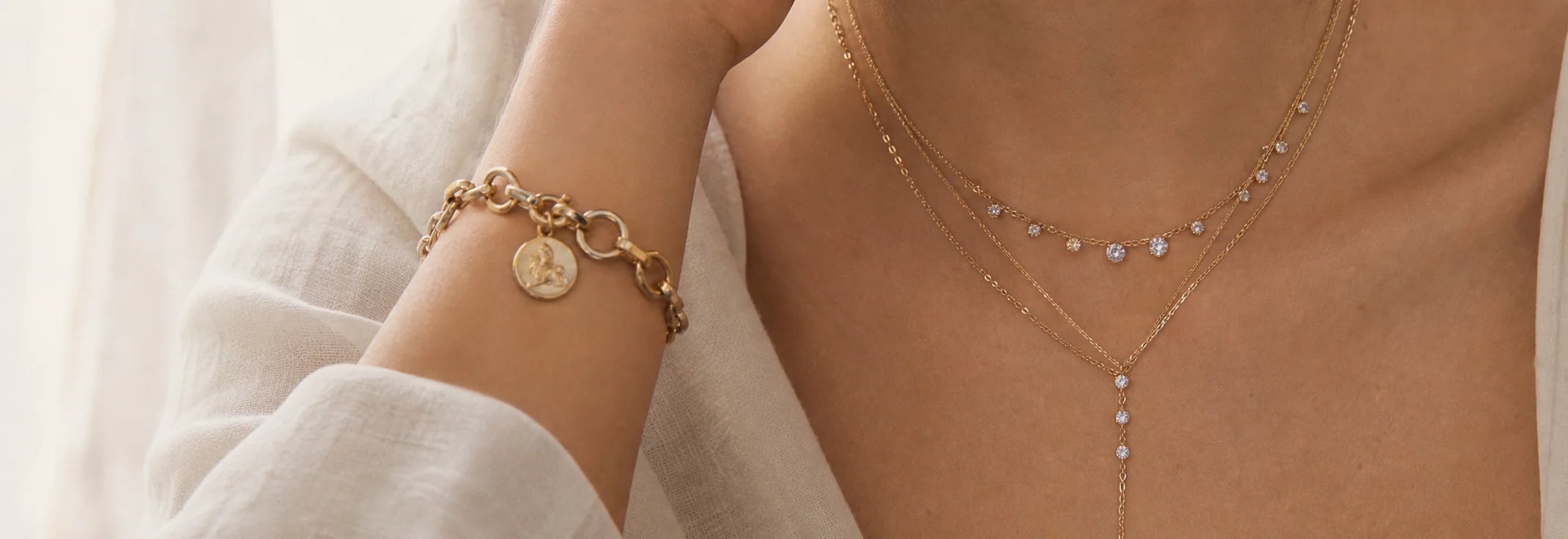
Several TUUGLOW pieces can share the same look. An open neckline can still carry the Cira Amber Collar Necklace, and a deliberately pushed sleeve can frame the Aalto Heart Cuff Bracelet, while the brooch remains the first thing that organizes the outfit. These pieces are finishing choices, not proof that an outfit is current; the clothes should already make sense without them. For more placement ideas, see our report on why brooches are back in style in 2026 or explore the brooch collection.

One relationship clear.Everything else quiet.
The strongest Fall 2026 outfit does not announce every trend at once. It makes one relationship clear: a protective coat over a quiet column, a crisp shirt beneath a soft knit, a leather jacket against a fluid skirt, or electric color interrupting familiar denim.
Repeat the structure. Change the weather layer, color or final detail. That is how a trend becomes personal style rather than a one-season costume.
Fall outfits 2026 FAQ.
What are the most wearable fall outfit trends for women in 2026?
The most practical directions are stronger outerwear, softened tailoring, leather or utility layers, fine knits with fluid skirts, and one saturated color against a neutral base. The easiest formula is one structured outer layer, one calm foundation and one deliberate point of contrast.
What colors are trending for Fall 2026?
Electric blue, red, royal purple, turquoise, softer peach tones and burgundy all appear in current Fall 2026 color reporting. For everyday wear, keep cream, camel, chocolate, charcoal, dark denim or navy as the foundation and introduce only one stronger color at a time.
Which jackets are in style for Fall 2026?
Long coats, blazers, leather bombers, trenches, utility jackets and anoraks all fit the season. The most important update is not a single jacket type but using outerwear to establish the outfit’s shoulder, length or volume.
How can I transition summer clothes into fall?
Keep one lighter piece and add structure around it. Wear a summer dress beneath a blazer or leather jacket, a fluid skirt with a fine knit and tall boots, or a white tee with relaxed trousers and a utility layer. Add warmth in removable stages rather than replacing the whole outfit.
How do I layer fall clothes without looking bulky?
Keep the base layer relatively smooth, add volume only once, and preserve one defined area such as the collar, waist, wrist, ankle or neckline. A long tonal line beneath the outer layer also helps several pieces read as one composition.
What shoes work with easy fall outfits?
Loafers, ankle boots, tall boots, pointed flats and simple low heels cover most of these formulas. Judge the shoe together with the hem: reveal the loafer beneath jeans, let an ankle-boot shaft disappear beneath trousers, or run a tall boot underneath a midi skirt for one continuous line.
Sources and further reading
- The 11 Fashion Trends That Define the Fall 2026 Season, Vogue
- The Top Fall 2026 Color Trends, Vogue
- Weatherproofed and Accessorized: Fall 2026 Copenhagen Trends, Vogue
- Milan Fashion Week’s Fall 2026 Street-Style Contrasts, Harper’s Bazaar
- The Key Pieces in a Fall 2026 Capsule Wardrobe, Harper’s Bazaar
- Five Easy Autumn 2026 Outfit Formulas, Who What Wear