How to wear a brooch on a coat or scarf
A practical guide to placement, proportion and fabric support—with six distinct ways to make a brooch feel considered rather than added on.

A brooch looks most convincing when it relates to the structure beneath it: a firm lapel on a coat, a supported fold on a scarf, or a dense placket on a cardigan.
Begin with the garment, not the brooch
On a coat, place the brooch where the lapel or shoulder can support its weight. On a scarf, use a firm fold rather than a loose edge. On a cardigan, choose a dense placket, rib or seam instead of an open knit. The aim is not simply to pin on more shine; it is to create one clear point of focus while protecting the fabric.
Before choosing a position, make three quick decisions. First, find the strongest part of the garment. Lapels, facings, collars, shoulder seams and folded scarf sections usually hold a brooch more securely than a single unsupported layer.
Second, consider visual scale. A compact brooch can sit close to the collar or finish a small scarf fold. A larger or more elongated design needs breathing room and a garment with enough visual and physical structure.
Third, check how the fastening works. A pin-back or safety-pin style passes through the fabric; a magnetic fastening does not, but it still needs a suitable surface and careful handling. Never force a pin through resistant material or assume that one fastening is right for every fabric.
If you are choosing for someone else, our brooch gift guide compares motif, scale, wardrobe and fastening from the recipient’s point of view.
Use a lapel, facing, collar, seam or dense fold instead of one loose layer.
Give an elongated or larger design more room; keep compact forms close to a collar or fold.
Check the pin or magnet against the exact fabric before deciding on the final position.
Let the surface decide the placement
High and clear
A coat gives a brooch the strongest setting. Place it on the upper lapel, just below the collarbone, or slightly toward the shoulder. That higher position remains visible when the coat is open and avoids pockets, buttons and belts. On an oversized coat, keep the brooch close to a seam or lapel edge so it still feels connected to the tailoring.
Balance the line
The left lapel is traditional, but either side works. Choose the side that balances the neckline, bag strap or hairstyle. On a softer blazer, pass the pin through the lapel and its facing together for support. Let one brooch be the decorative point rather than competing with several statement details.
Build the fold first
Create the scarf arrangement before adding the brooch, then use a dense fold near the shoulder. Fine silk, satin, gauze and loose weaves need extra care: test a concealed area and do not use a heavy piece if the fabric pulls or sags. A magnetic fastening is not automatically right for several scarf layers.
Find the dense area
On a cardigan, use the placket, a dense rib, a reinforced neckline or a shoulder seam. Avoid open or laddered knits where a pin can enlarge a loop. If a soft knit is dense enough, a small fabric stabilizer behind it can distribute weight; if the surface still twists, choose another position.
From a compact bloom to a crystal cascade

Astra Orbit
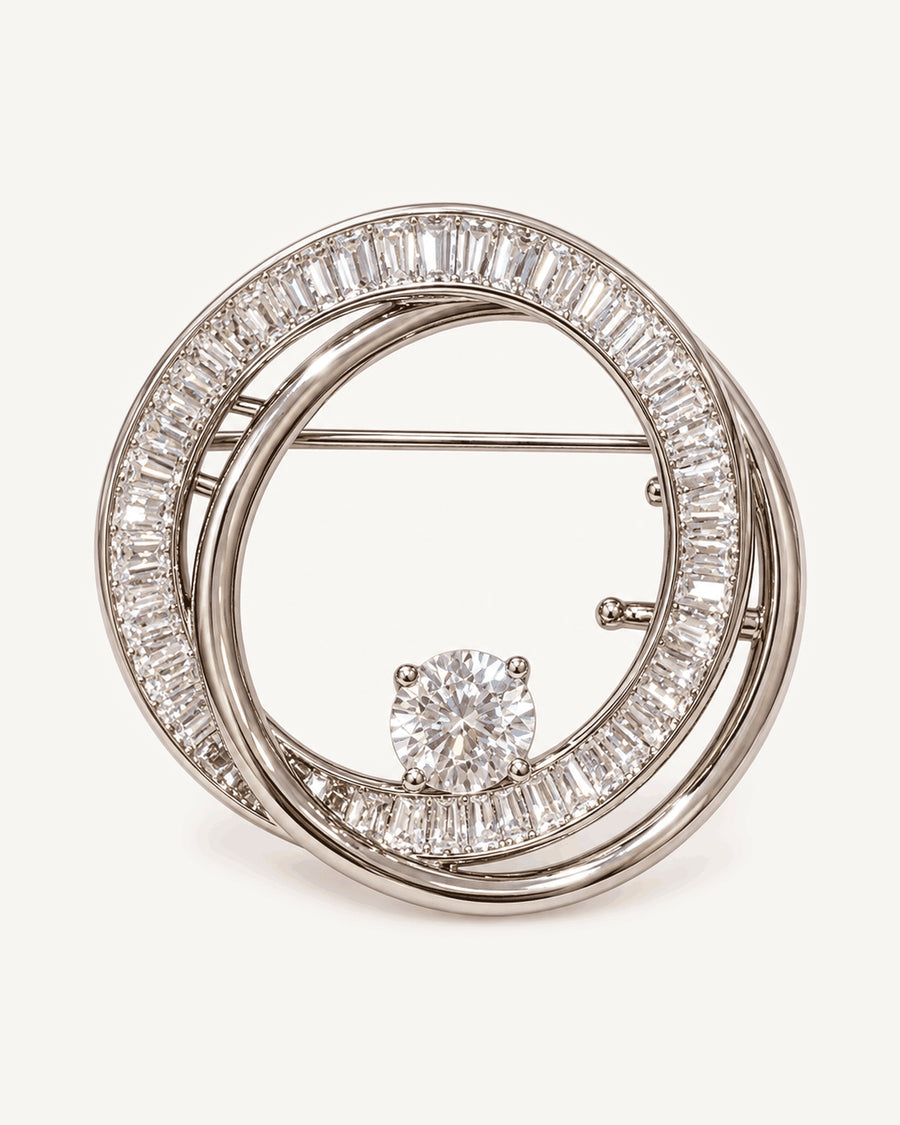
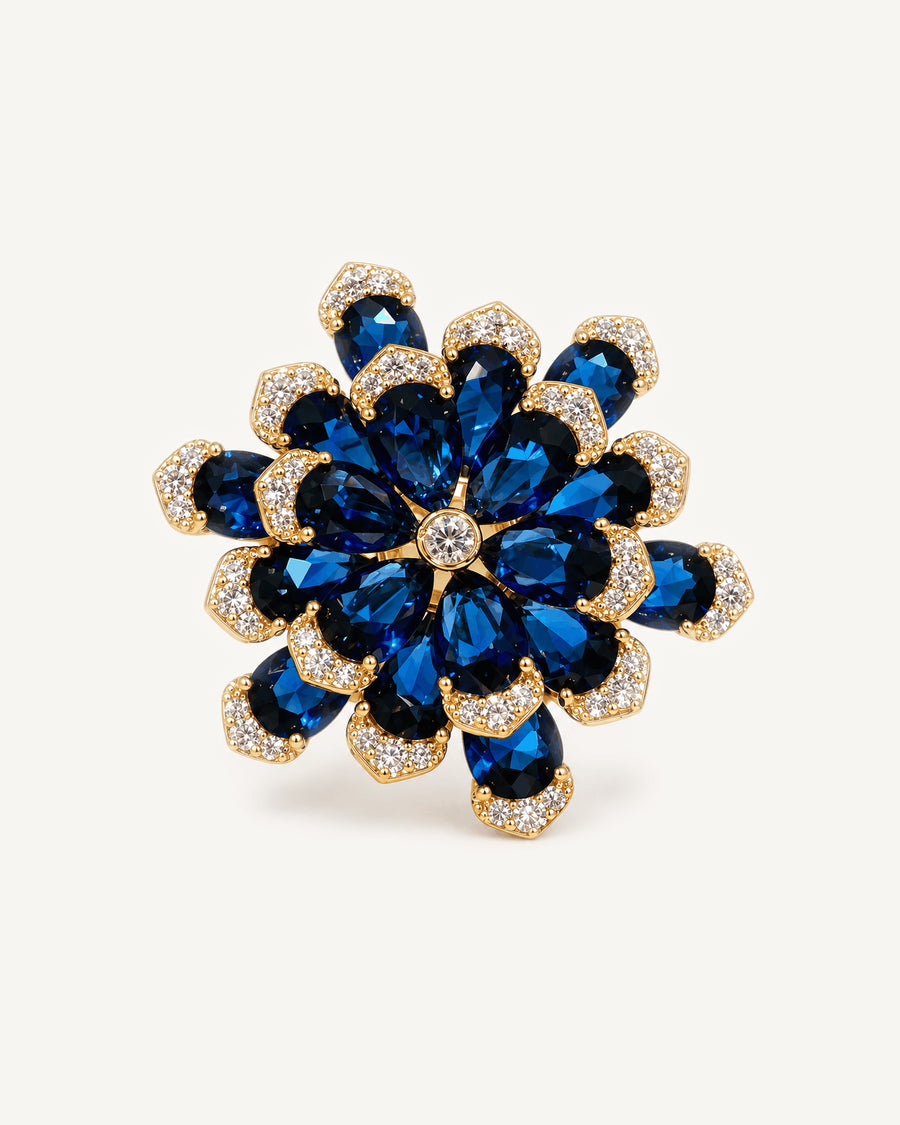
The Astra Orbit Crystal Brooch pairs an amber-tone pear crystal with clear accents and an 18K gold-plated finish. At 5.6 × 4.1 cm and 23.8 g, it has enough presence for a dark blazer, wool coat or neutral tailored lapel. Its pin-back is best placed through a firm lapel section rather than an unsupported knit. Let the orbital form sit upright or angle it slightly toward the shoulder.
View Astra

Odette Swan
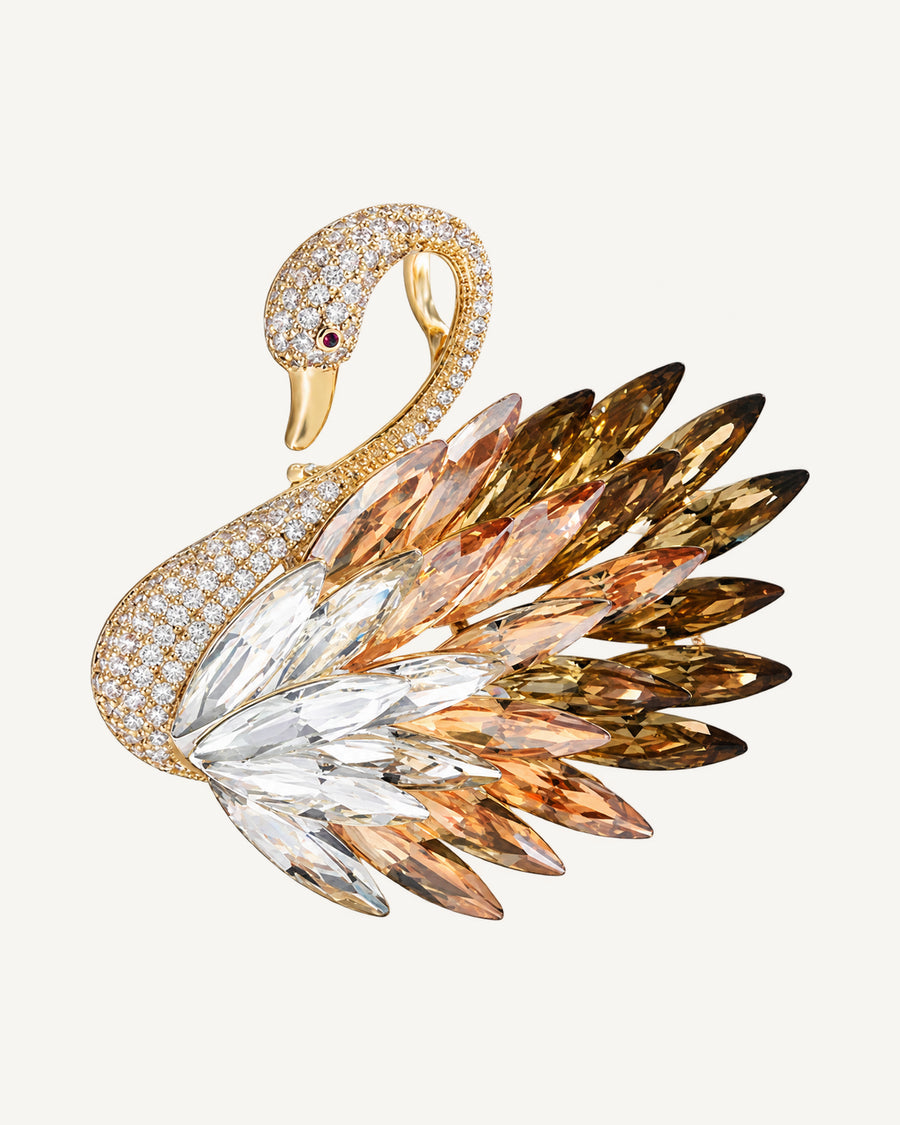
The Odette Gold Crystal Swan Brooch uses a swan silhouette with clear and champagne-toned accents in a polished gold-tone finish. It measures 4.6 × 4.9 cm and weighs 23.75 g. The curved motif works especially well against cream, camel and dark tailoring. Place it high on the lapel, where the pin-back can be supported by the coat facing.
View Odette

Lykke Clover
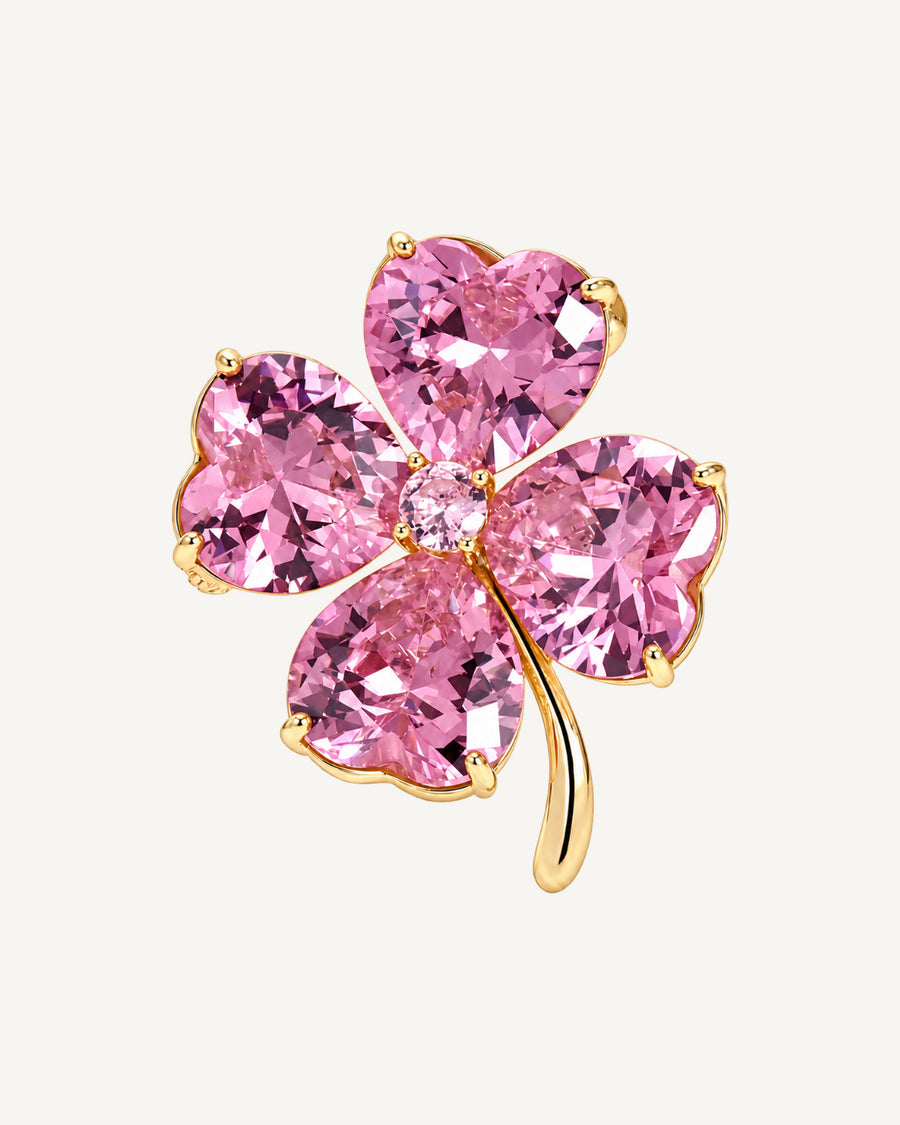
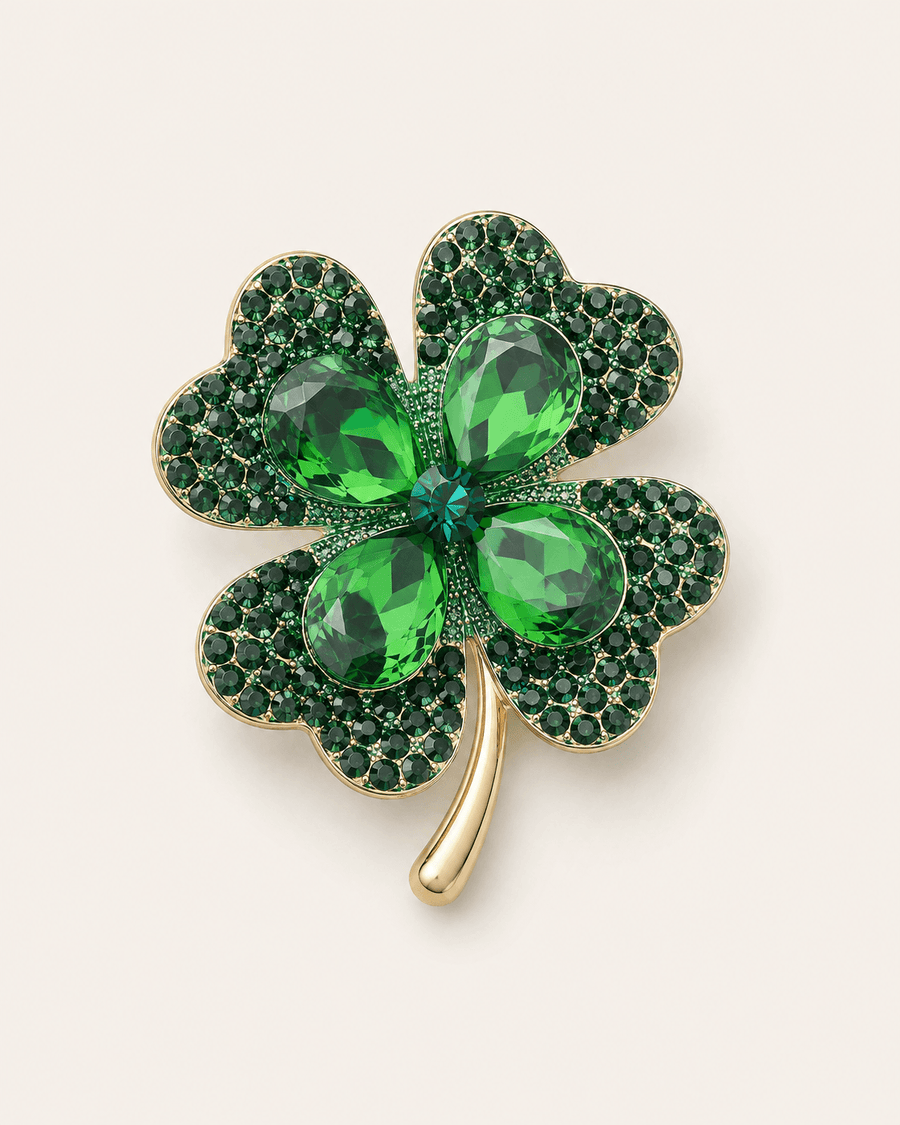
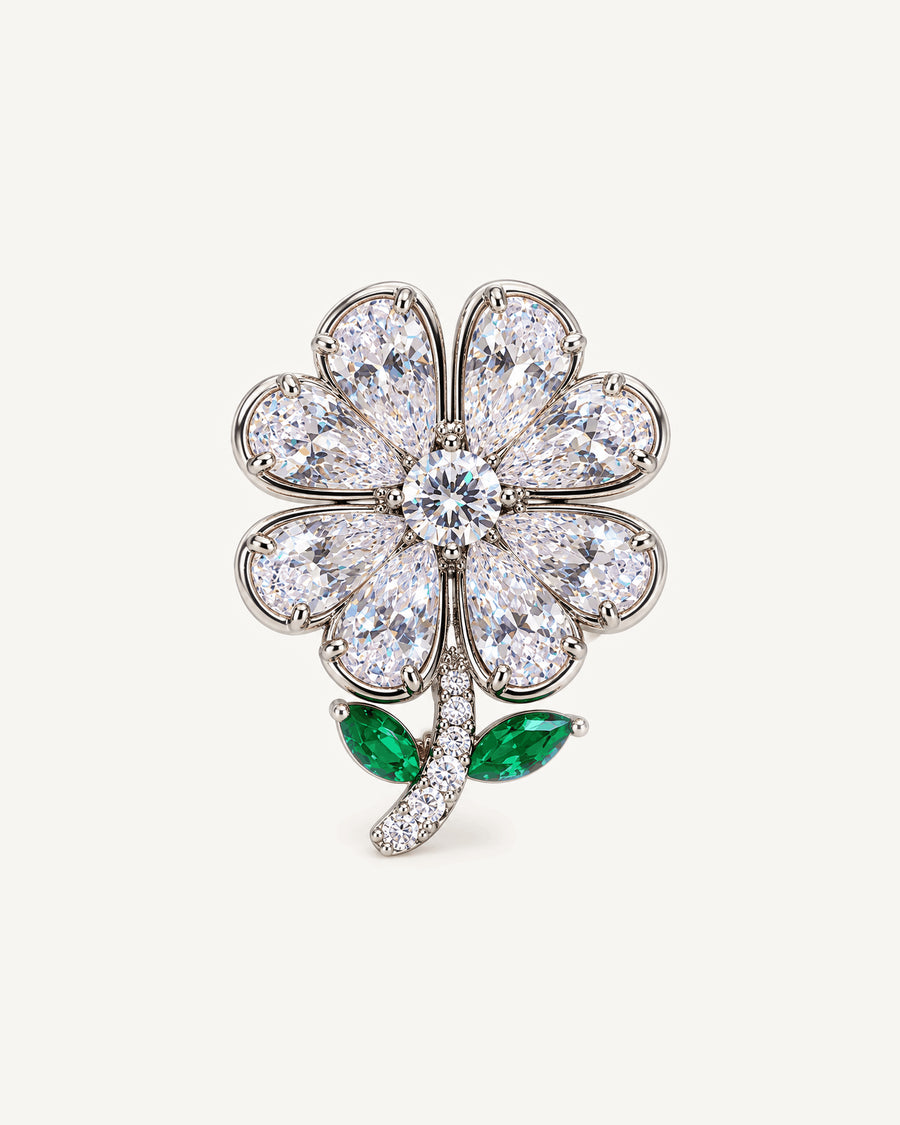
At 3.1 × 2.1 cm and 15.1 g, the Lykke Pink Clover Brooch is the most compact piece in this edit. Pink synthetic zircon and a central stone give the four-heart clover form a clear focal point. Its horizontal safety pin suits a dense cardigan placket, a secure scarf fold or a smaller area on an occasion coat. Leave quiet space around it rather than surrounding it with competing accessories.
View Lykke

Meri Bloom
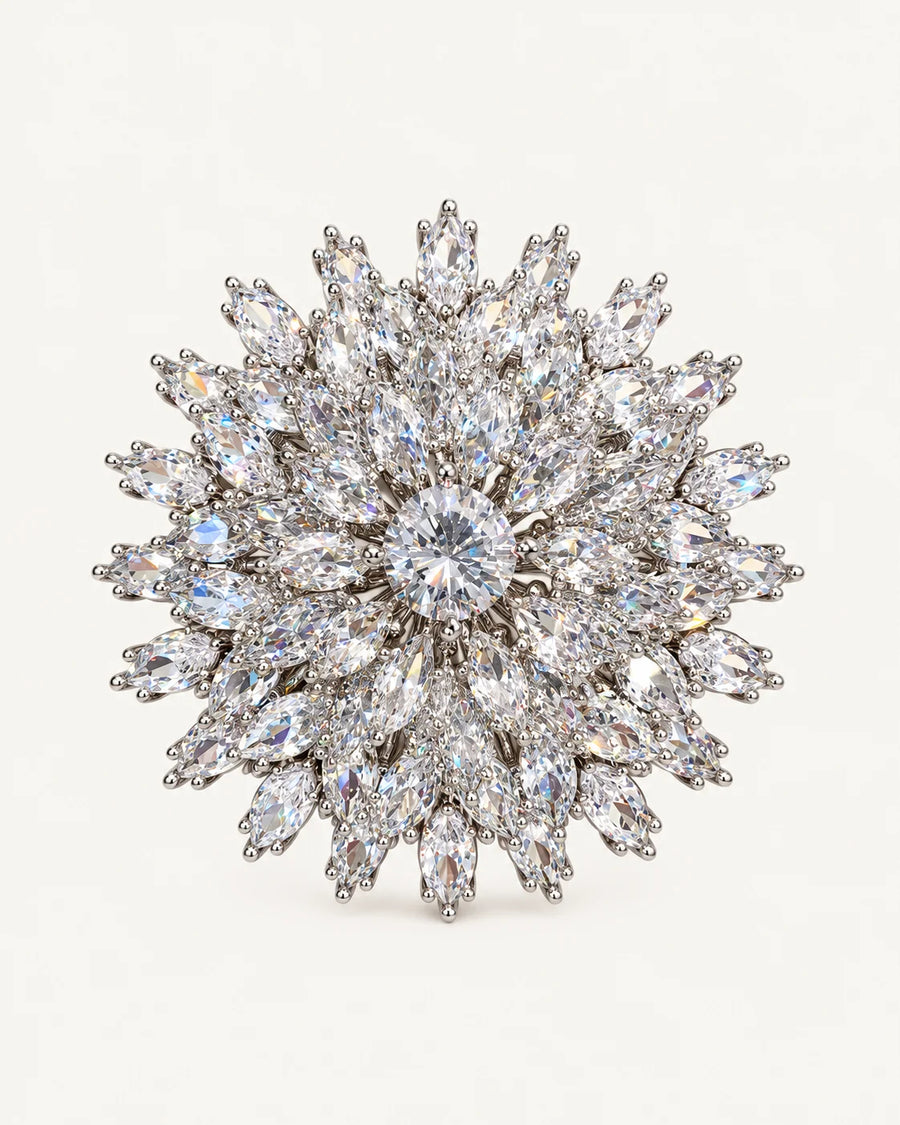
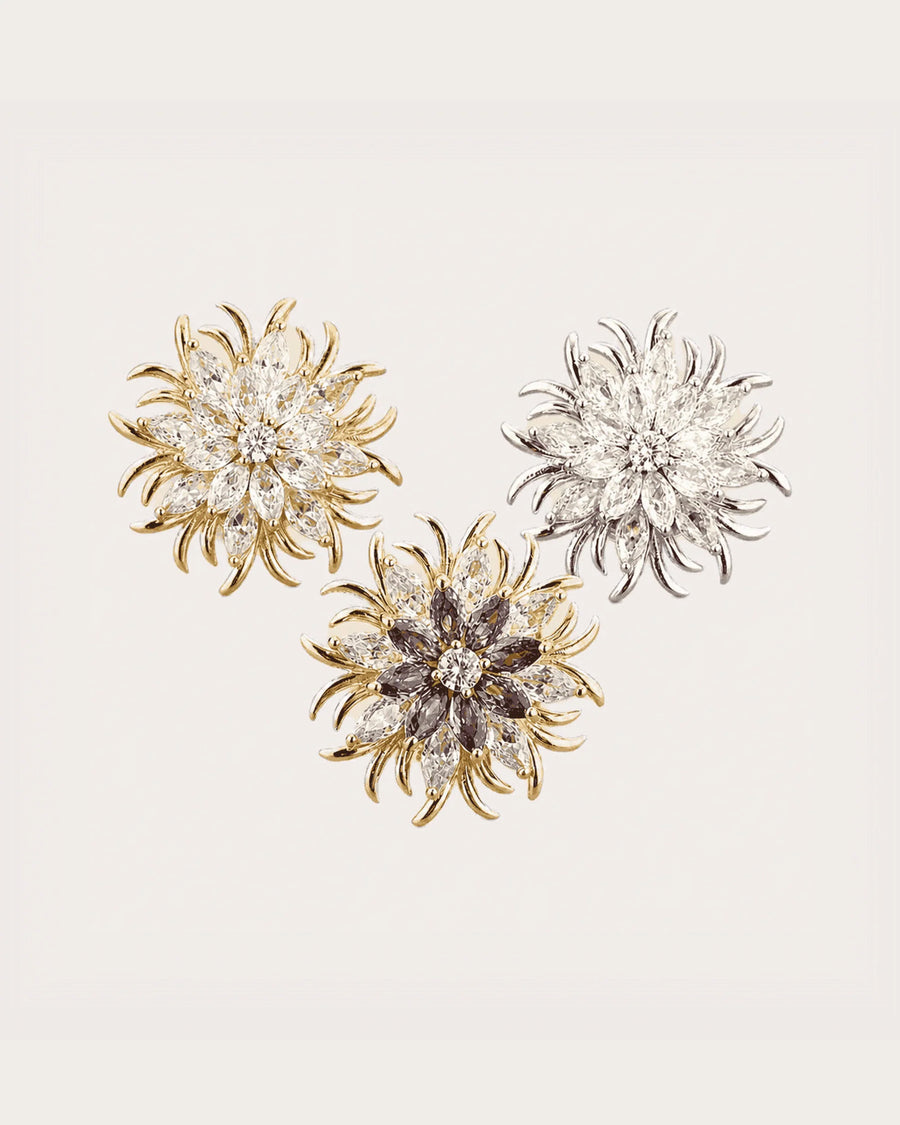
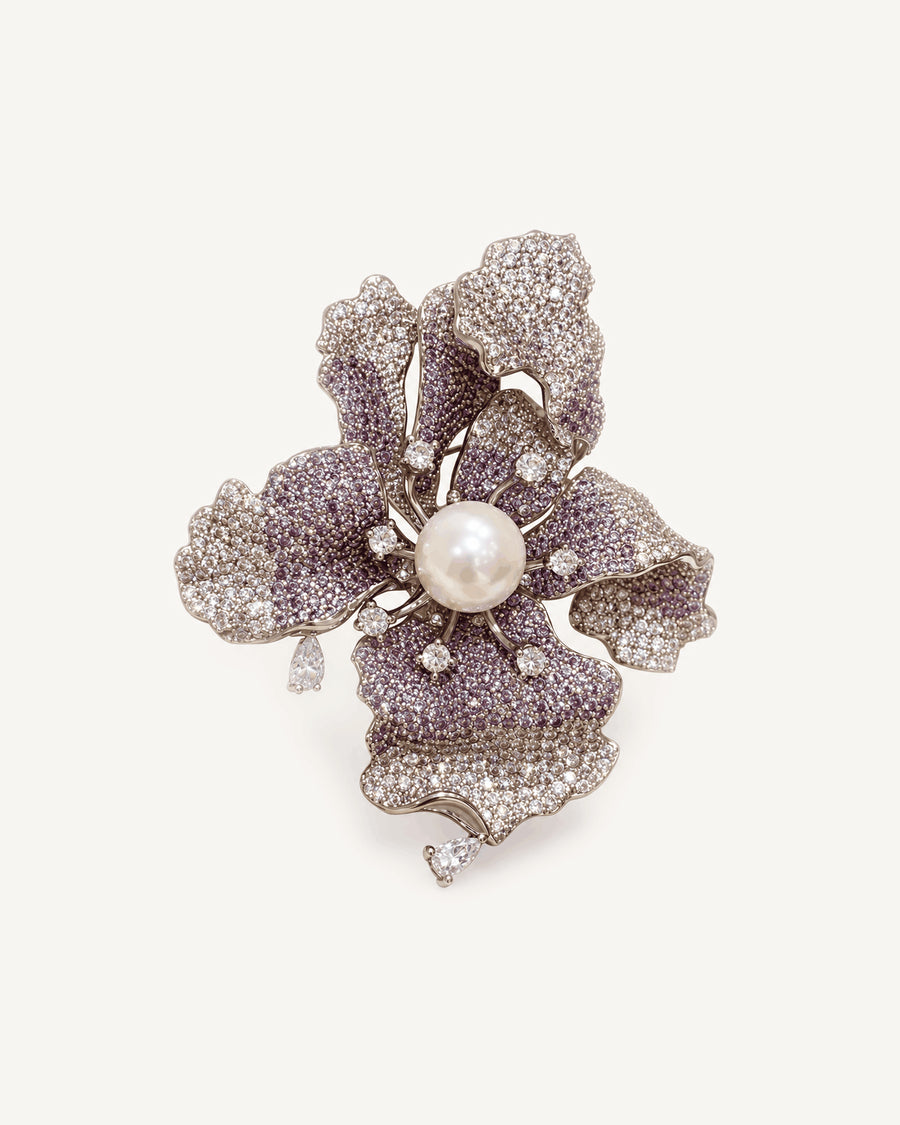
The Meri Magnetic Bloom Brooch measures 2.2 × 2.2 cm, weighs 8.8 g and comes in three colourways. Its two-piece magnetic fastening is intended for one firm layer. Avoid thick, loose, delicate or multi-layered areas, which can weaken the hold or distort the fabric. Keep it away from cards, watches, electronics and medical devices. It is a subtle option for a stable collar—not a solution for every scarf or knit.
View Meri

Kajo Cascade
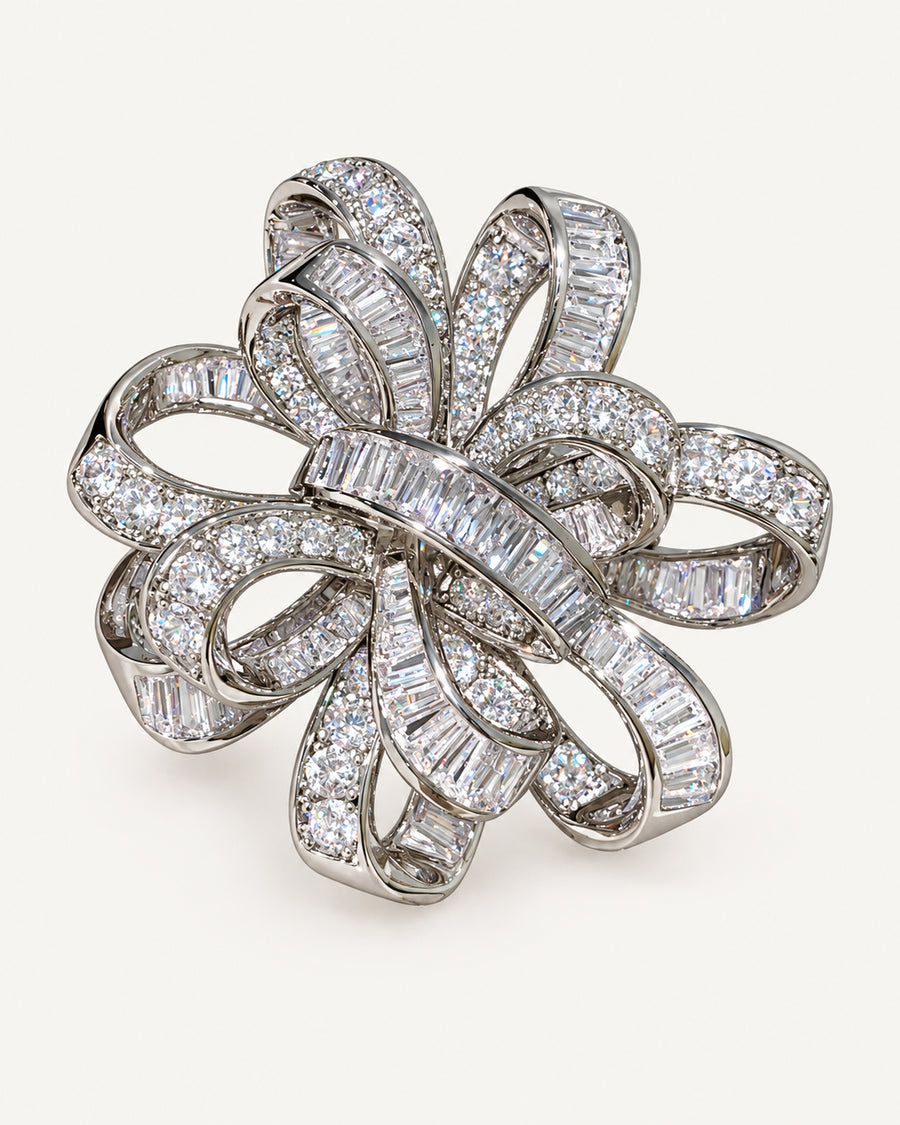
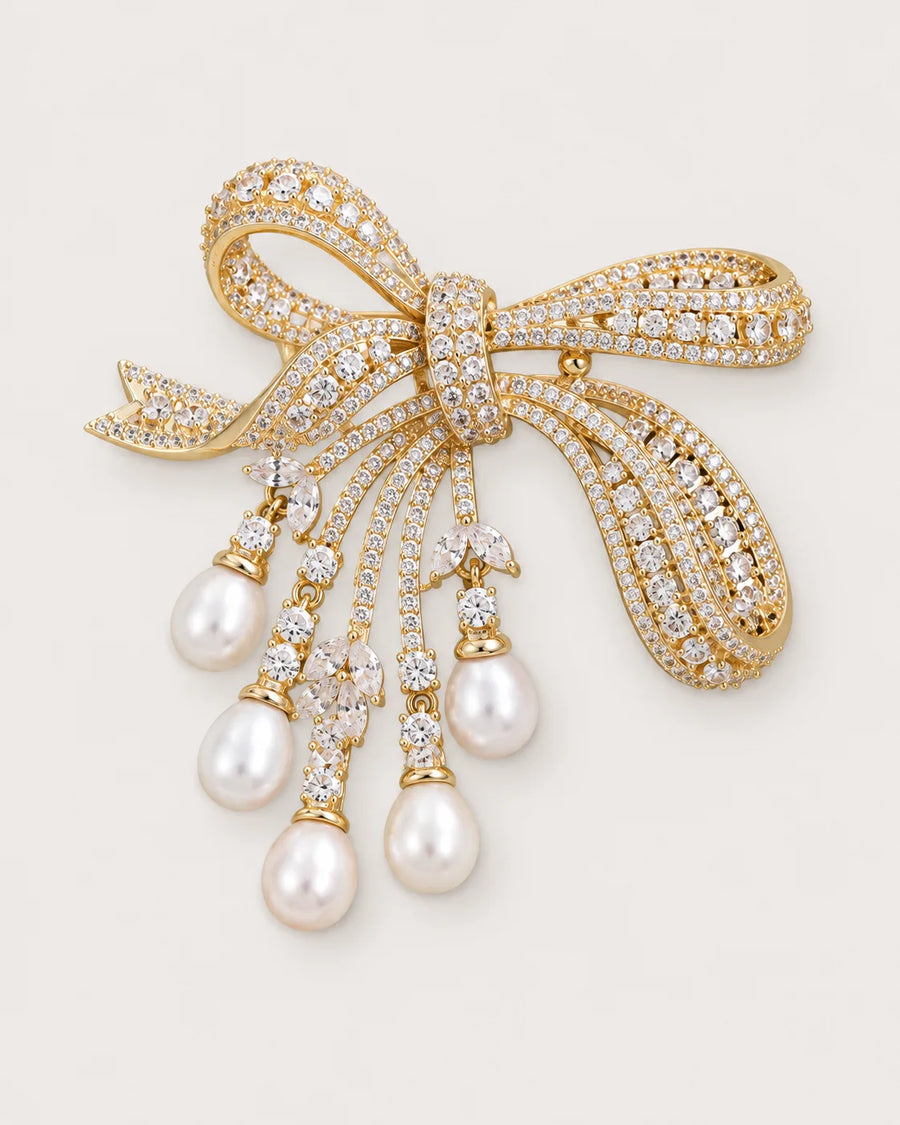
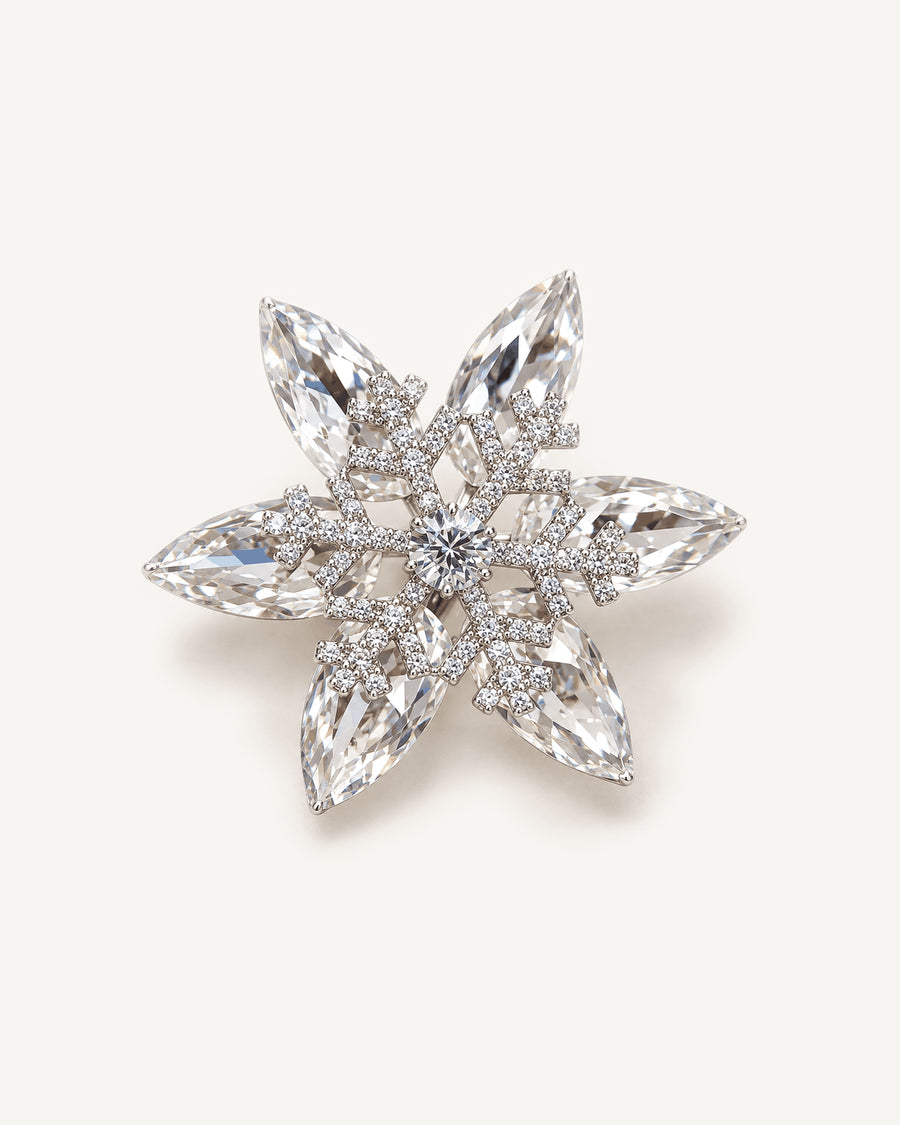
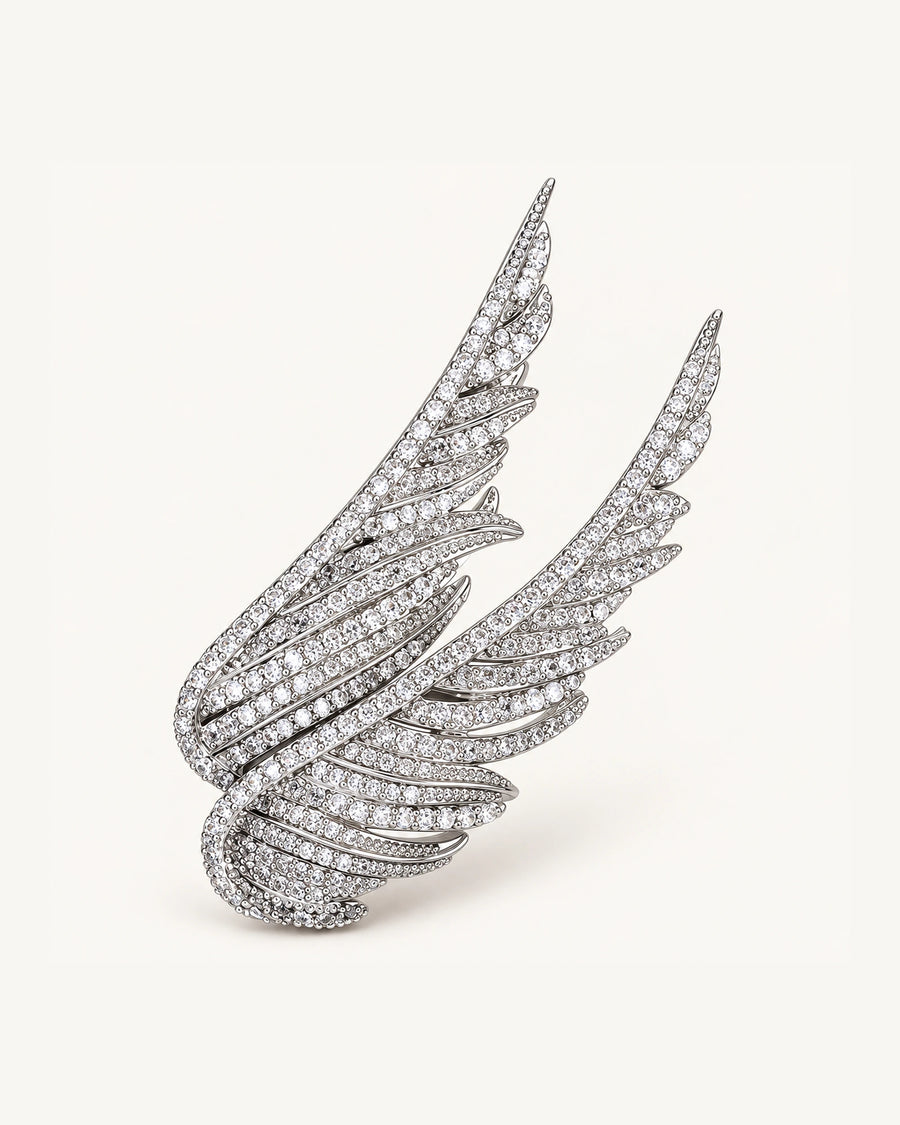
The Kajo Crystal Cascade Brooch creates a long vertical line with clear cubic zirconia and a polished silver-tone finish. Measuring 22.2 × 2.9 cm and weighing 23.1 g, it needs a firm blazer or coat surface. Position it so the five-strand cascade hangs freely and does not cross a bag strap, pocket opening or fastening. Do not bend, pull or twist the design when attaching or removing it.
View Kajo

Valo Camellia
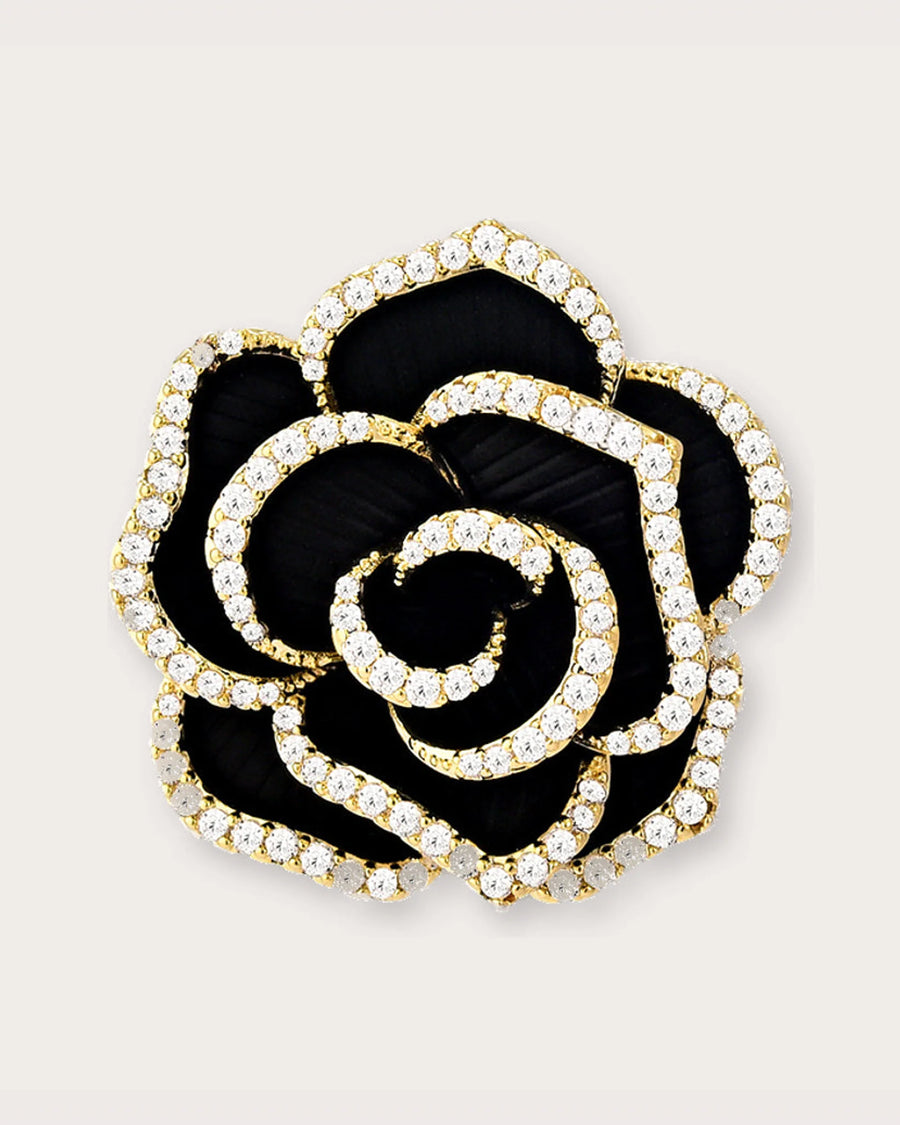
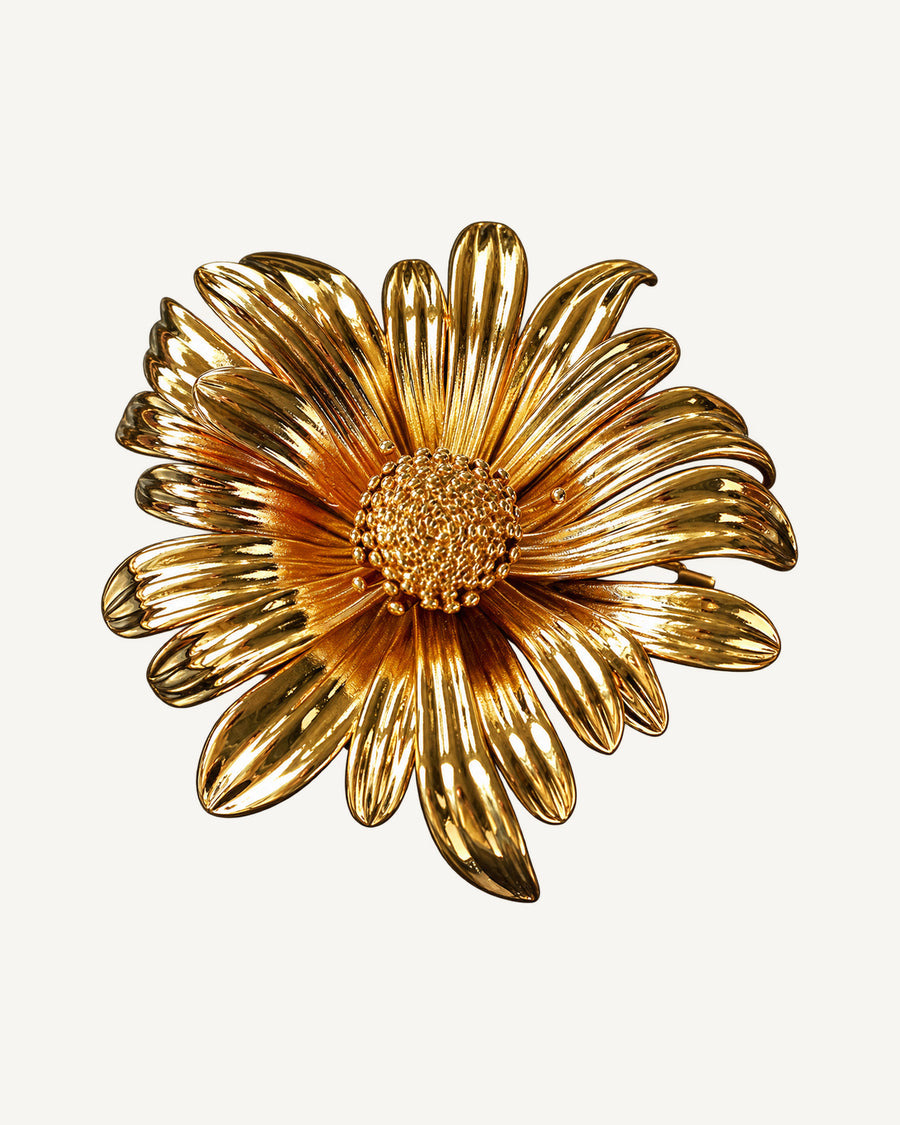
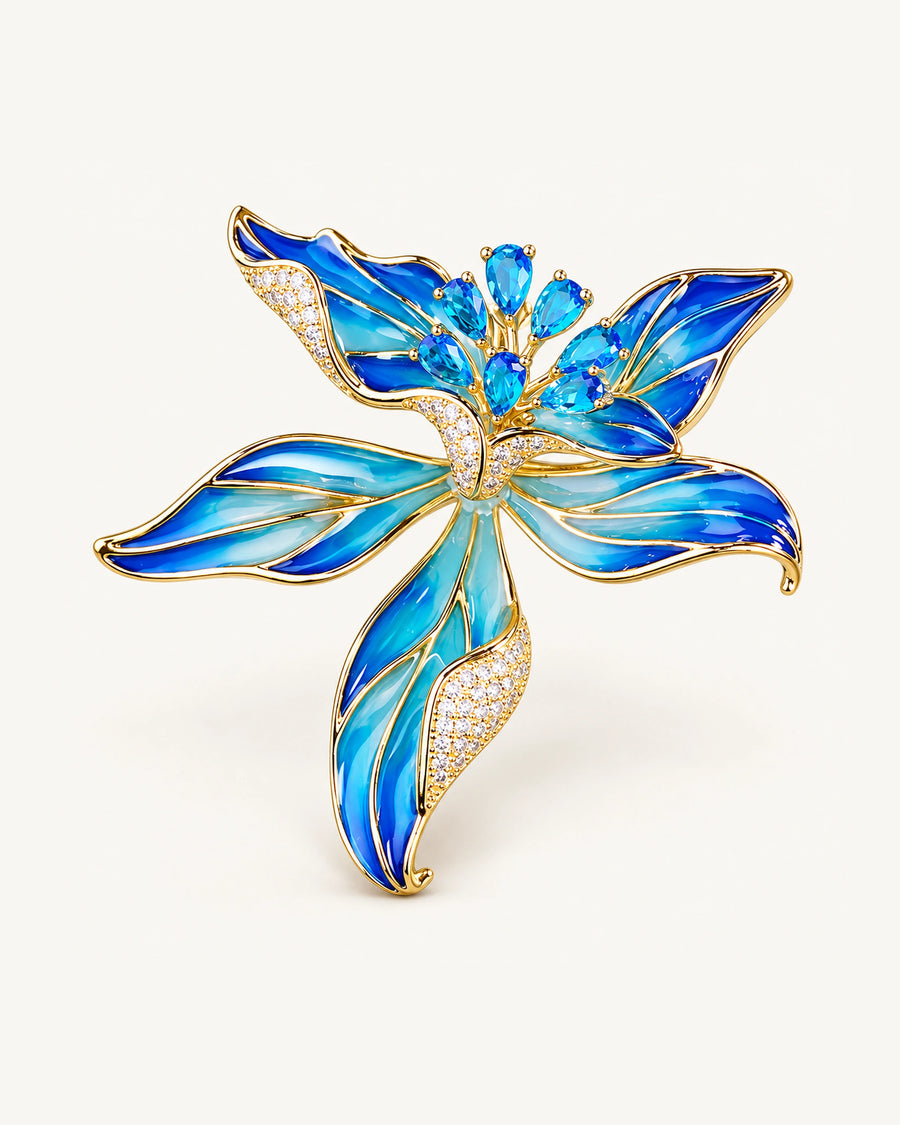
The Valo Crystal Camellia Brooch combines a polished gold-tone finish with clear zircon and a horizontal safety pin. Its open floral form stands out against black, ivory, camel and deep green tailoring. Place it on an uncluttered lapel or upper coat panel and allow the camellia shape to act as the outfit’s primary decorative element.
View ValoHow to reduce pulling and visible pin marks
No pin fastening can guarantee that every fabric will remain unmarked. Before wearing a brooch, test the fastening on an inside seam or concealed area. Choose a reinforced section, support softer fabric from behind, and make sure the pin is fully closed without forcing it.
Remove the brooch before taking off the garment, rather than pulling the coat or cardigan around it. Never leave a heavy piece hanging from a delicate garment overnight. For scarves and fine fabrics, the safest choice may be a different placement, a lighter piece or no pin at all.
Close, wipe and store
Remove brooches before laundering or steaming the garment. Wipe each piece gently with a clean, soft, dry cloth, close the pin, and store it separately so stones and polished surfaces do not rub against other jewelry. Keep magnetic components together but away from cards, watches, electronics and medical devices. Exact materials, finish and care remain product-specific, so check the individual product page before wear.
Brooch placement, answered
Which side should a woman wear a brooch on?
The left lapel is traditional, but either side is correct. Choose the side that balances the neckline, hairstyle, scarf and other accessories. Placement should look intentional from the front, not simply follow a rule.
Where should a brooch sit on a winter coat?
Usually on the upper lapel or slightly toward the shoulder, where the coat has enough structure to carry it. Avoid very thick overlaps, pocket openings and areas that bend sharply when you sit.
Can you put a brooch on a scarf?
Yes, if the scarf has a sufficiently firm fold and the fastening will not damage it. Test fine silk, satin and loosely woven fabrics first. A heavy brooch should not be allowed to pull on one loose layer.
How do you stop a brooch from sagging?
Move it to a seam, lapel facing, dense fold or reinforced section. A small fabric stabilizer behind the garment can help distribute weight. If the surface still drops or twists, the brooch is too heavy for that placement.
Will a brooch pin leave a hole?
It can, especially in delicate, tightly finished or loosely woven fabrics. Test a hidden area, never force the pin, and avoid open knits, silk and fine satin unless you are confident the fabric can accept it.
Is a magnetic brooch always safer for fabric?
A magnetic fastening avoids piercing the material, but it is not suitable for every garment. It needs the correct layer thickness and stability, and it must be kept away from cards, watches, electronics and medical devices.
Shape, scale and surface—considered together
The best choice begins with the garment and ends with the exact fastening, dimensions and care of the piece. Continue into the current collection to compare every brooch.
Explore all brooches